









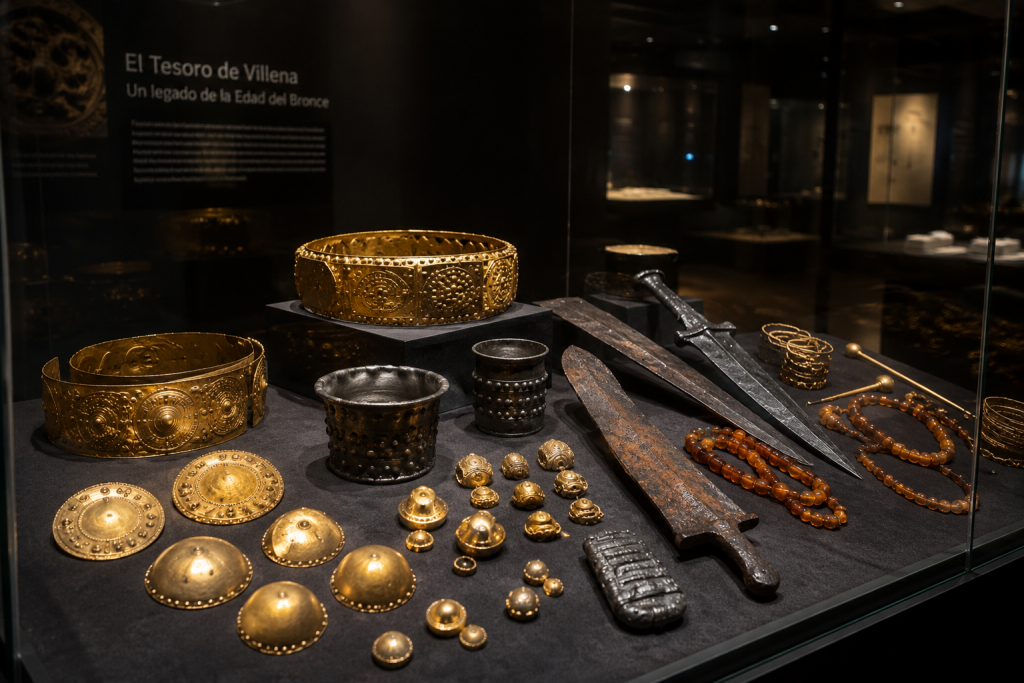
One of Spain’s best-known archaeological treasures has fallen into the hands of criminals. Dozens of ancient objects made of gold, silver, iron and amber have been stolen from the Villena museum (Museo de Villena, MUVI) in Alicante province. The thieves needed less than four minutes to break in and get away.
Investigators believe the robbery was carefully planned. Police are also looking into whether a diversion was used.
Four minutes for a robbery
The thieves broke into the museum in the early hours of the morning:
- 5:16 — an alarm went off at the municipal sports centre on the outskirts of Villena;
- 5:20 — while a patrol was on its way there, an alarm came in from the museum;
- 5:24 — police arrived at MUVI, but the robbers had already fled.
According to the mayor of Villena, Fulgencio Cerdán, the thieves first tried to get in through the main entrance. When that failed, they went for the side windows and, despite the security systems and reinforced glass, made their way inside.
The speed and precise sequence of their actions suggest that the attackers had studied the building in advance and knew exactly how much time they had. The Guardia Civil and the local police are investigating.
Losses of more than €1.5 million
According to preliminary estimates, the value of the stolen items may exceed €1.5 million. For specialists, however, what matters far more is their historical and archaeological value, which can hardly be measured in money.
Besides the pieces of the treasure, the thieves took three crowns of the Virgin Mary and the Infant Jesus that were also kept in the museum. A fourth crown fell during the escape and was left behind. According to the mayor, all that remains of the main collection are three silver vessels, a bracelet and part of a sceptre ornament.
A treasure more than three thousand years old
The Tesoro de Villena is one of Spain’s most famous archaeological finds. The story began in 1963 with the chance discovery of an unusual bracelet on a building site on calle Ferriz. At first it was mistaken for a part from a lorry engine. Later the bracelet reached the jeweller Carlos Miguel Esquembre, who passed it on to the archaeologist José María Soler. That is how researchers tracked down the spot where the treasure itself was later found.
On 1 December 1963, Soler’s team found a vessel hidden in the bed of a dried-up stream with treasures concealed inside: 59 objects of gold, silver, iron and amber weighing about 10 kilograms in total. The find became one of the most important Bronze Age discoveries on the Iberian Peninsula and one of the best-known prehistoric collections of gold objects in Europe.
What happens next
The police now have to identify the robbers and recover the artefacts. The main danger is that the unique pieces could be smuggled out of Spain or split into separate lots for illegal sale. Every day counts: the longer the stolen items stay out of the museum, the greater the risk that the collection will be lost to science forever.
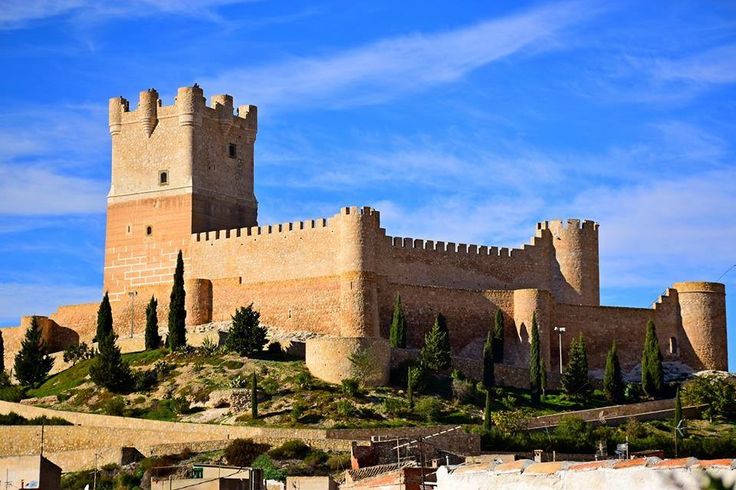
Atalaya Castle in Villena is part of our tours of the province’s medieval fortresses.